Showing posts with label X-Ref: SG/FinnLAGG3/0714. Show all posts

Sunday, 13 July 2014

Scotia Grendel 1/300 LAGG-3 - Part 2

Ok, I couldn't bear it...I just had to tinker!
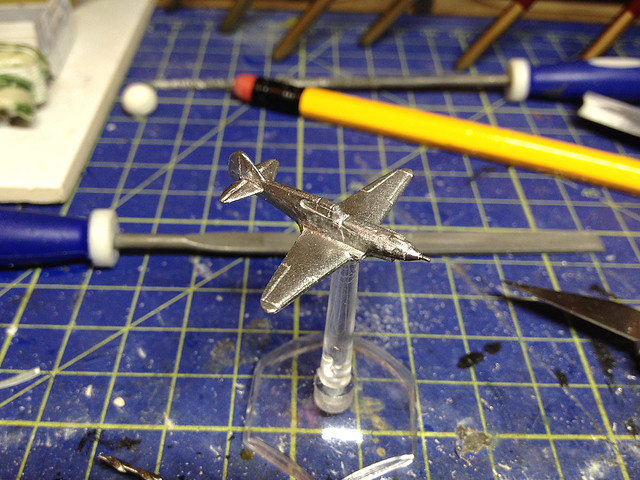
I decided to correct the wing profile with just a tiny bit of Milliput. I'm not sure how hardy this modification will be for wargaming, Milliput can dry quite hard but having it so thin on trailing edges like this might be asking for a chip if handled roughly. I won't be using my models for gaming though.
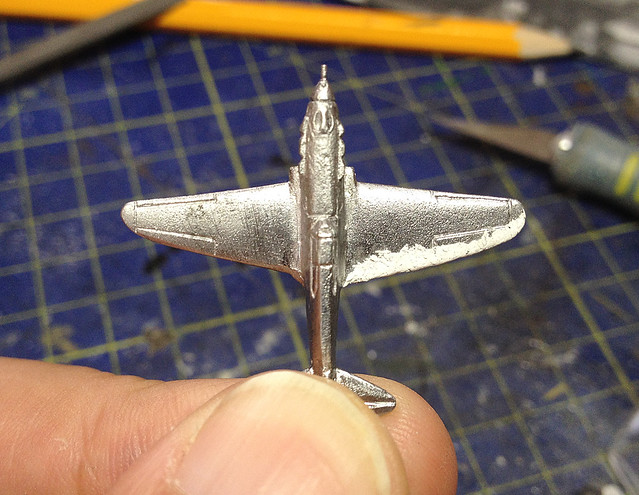

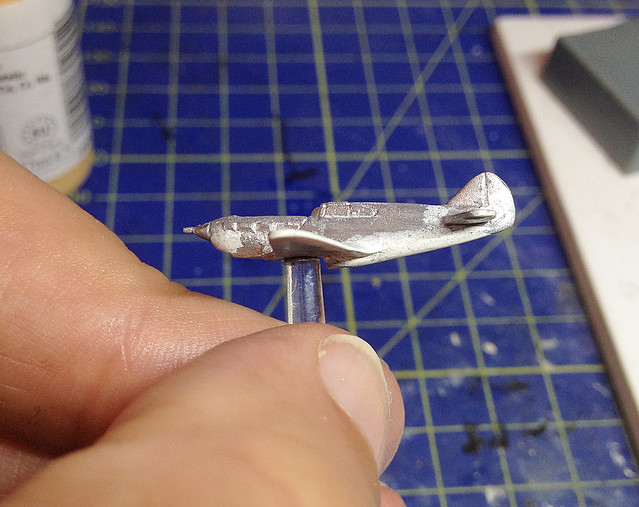
Next was the nose profile. As it was it was a bit too P-40 Warhawk looking, so I added some Milliput on the chin to round out the area between the prop boss and the intake.
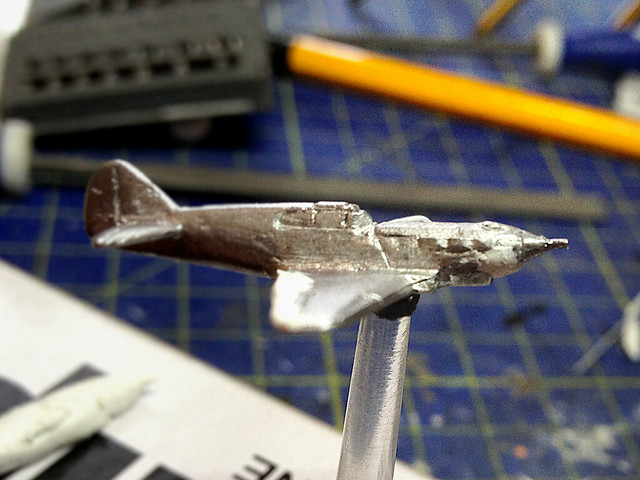
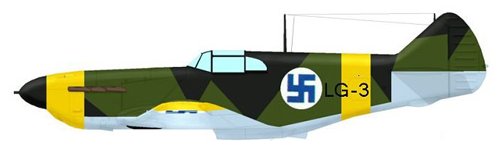
LAGG-3, Nurmoila, Finland, March 1943. Artist: © Rick Kent.
More Finnish LAGG-3 schemes at Wings Palette.

Finally, I smoothed out the lower body from the intake to the tail to make it more like the version in use by the Finns. I'm not really that familiar with the numerous versions of this plane but the shape of the fuselage between the tail and center intake seems to be one of the things that differentiates them.
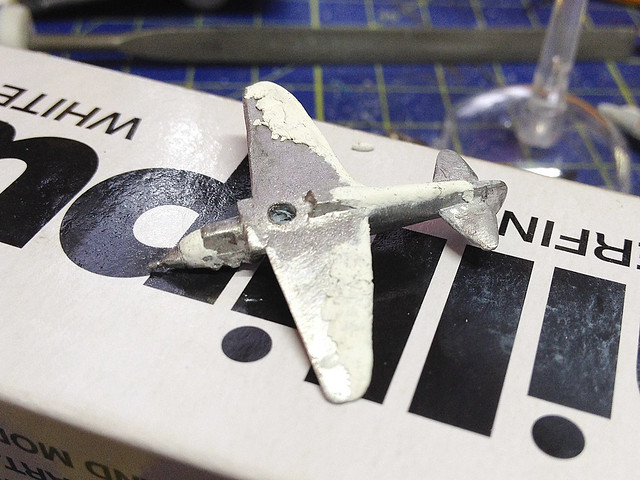

Finally, I smoothed out the lower body from the intake to the tail to make it more like the version in use by the Finns. I'm not really that familiar with the numerous versions of this plane but the shape of the fuselage between the tail and center intake seems to be one of the things that differentiates them.

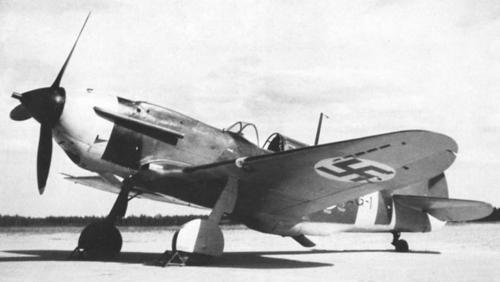
The aircraft became LG-3 in Finnish service, and was assigned to LeLv 32 during
winter 1942/43; this unit was based based at Nurmoila, on the Olonets isthmus.
Source: mig3.sovietwarplanes.com

At this point should say that this model will never be perfect - I am carrying out these small amendments simply to satisfy my own peculiar obsessive nature. For wargaming this 'marker' is quite adequate to represent this type of aircraft - doing this sort of fiddling about will not improve it's ability to act as a 'piece' in a game. (I perhaps should have put this paragraph at the top of the post.)

But in a strange way this sort of fiddling about is what I enjoy most about modelling and why I continually buy cheap wargame models and spend so much time trying to make them look better than they perhaps ought to be. In short, were we talking houses I would be the guy that likes 'fixer uppers'!

Anyway - back to the LAGG-3.
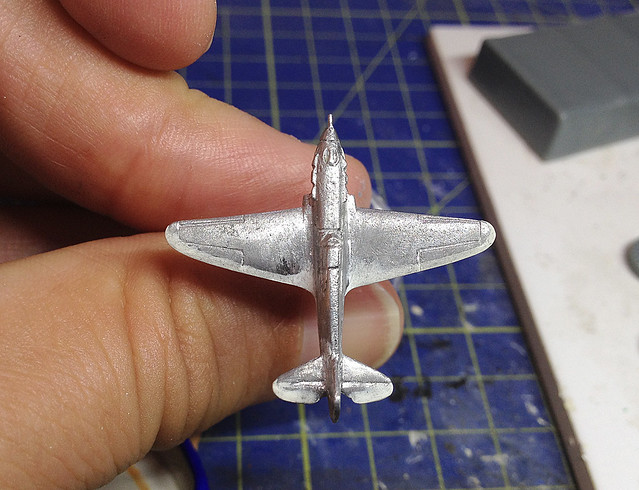
The new 'improved' wing shape - symmetrical and more accurate.

It's the next morning now, I like to give Milliput a whole night to cure properly. This extra time really makes the material quite solid and it sands better in my opinion. I suppose the ideal is that you would have a couple of jobs on the go so you could set one aside to cure while you get on with another (and indeed that is what I did in this case).

The finished profile - a little more like the real aircraft (hopefully).
Now, preparation work done it's time to start the painting process. Again, I am just guessing the best way to do this - I haven't found a 1/300 model tutorial online - so I am going to approach this as I would a larger scale kit and prime it grey to begin with. As this model is white metal this seems to make sense to me.


Now, finally, to the big question. Hand brush or airbrush?

At 1/300 scale I am far more tempted to have - at least on this test model - a go with hand painting the model. An airbrush or aerosol spray seems overkill (unless you were doing a batch of these for a wargame).

As for the paint scheme, well as you have seen with some of the reference photos I've included there is very good historical information on the exact colour schemes to be applied to the Finnish LAGG-3s. In fact, as there were only 3 of these fighters in service with the Finns there is exact schemes for each of these specific aircraft - AND, my favoured example of 'LG-3' (see above photo) there are two specific schemes, one for up to 1944 and one after 1944. SO no problem there!

For more information on these Finnish LAGG-3s go to mig3.sovietwarplanes.com/lagg3/

Next: Painting the LAGG-3.

Oh! PS...The little transparent plastic stand doesn't come with the model. This has to be bought separately. I got mine from Scotia Grendel at the cost of £1.50 for a pack of five.

Friday, 11 July 2014

Scotia Grendel 1/300 LAGG-3 - Part 1

Owing to a really annoying problem with my current project I decided to switch over to one of the little white metal aircraft models that I bought from Scotia Grendel. I am hoping that by the time I finish this mini-project that I might have solved the issues I am having with my larger 1/72 scale model. We'll see.


Anyway, of the half-dozen aircraft I got from Scotia Grendel I decided that the LAGG-3 would have the dubious honour being my very first 1/300 scale victim. The Lavochkin-Gorbunov-Gudkov LaGG-3 was a Soviet design constructed almost entirely from wood-laminate and in 1941 it was considered to be one of the Red Air Force's most advanced fighters. Unfortunately it seems that that didn't mean all that much in the face of opponents like the Me-109 and it proved unpopular with pilots.

My interest in this plane is derived from the fact that Finland operated 3 captured examples of this fighter. Though as far as I was able to determine the captured LAGGs didn't particularly distinguish themselves as I can only find one mention of a 'kill' made by one of them (which is particularly poor considering some of the impressive talleys scored by the tenacious Finns in even older and technically obsolete aircraft).

Source: Wikipedia


The Scotia Grendel model
At 1/300 scale I don't suppose I was expecting much in the way of detail, much less so as the model is made using my nemesis medium - white metal! And - quelle surprise! - this model didn't change any preconceptions I had.

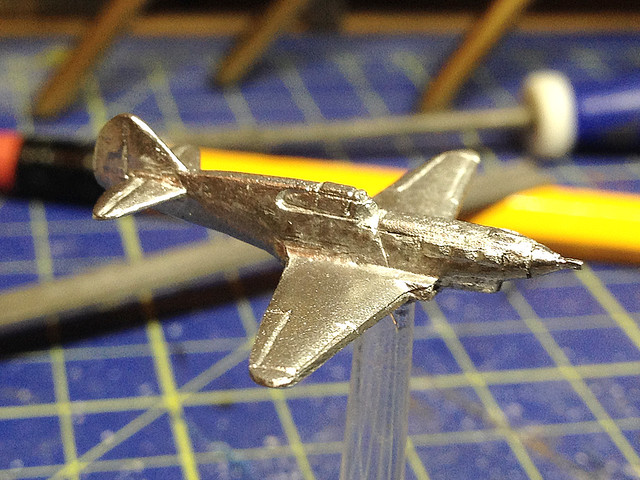
Looking decidedly more P-40 than LAGG-3 I think this plane has been on a diet!

Even though it is small I was still a little disappointed in some of the apparent inaccuracies. For example, one of the most noticeable features is the wing shape, here Scotia Grendel just seem to have got it plain wrong. Though this may, in part, be to do with the amount I ended up filing off the trailing edges in order to make the overall shape of the main wings symmetrical. (So you will have to decide - fatter asymmetrical wing profile, or thinner symmetrical profile!)

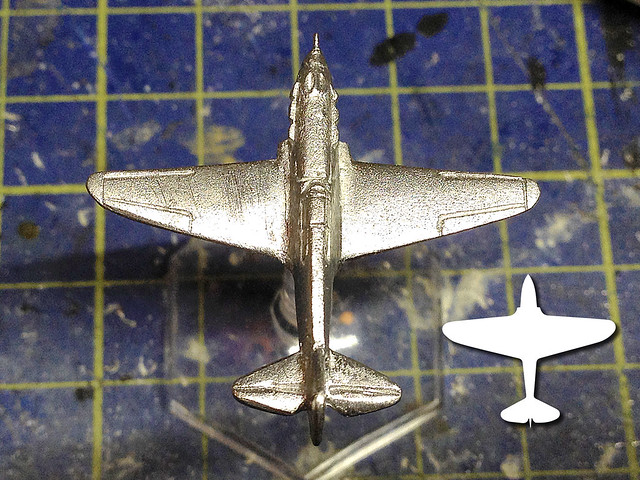
As a tabletop wargame marker I think it's quite important that the wing silhouette is as accurate as can be - given that is the most readily identifiable feature of these tiny models as you look at them from above and at a distance.

The top-down profile. Inset is the correct profile, having cleaned up the model's
wings for symmetry they are now too straight and narrow towards the tips.
Source: Wikipedia

There were other tiny gaffs too, which I could list but I'll let the accompanying photos - and the reference pictures - speak for themselves. I don't really want to start out my 1/300 scale enterprise by heaping a load of criticism onto a type of model I have very little experience of - after all, as these are my very first examples of the scale I have no idea if the quality is the 'norm'. (Not for the first time recently I have had to remind myself that a model I am dealing with was made with wargaming - and not display - in mind).

Anyhoo. As I am really using this particular aircraft model as a test model - as I work out strategies for working with the scale - I am prepared to wright this one off to a certain extent. I got to work doing what cleaning up there was with a fine file. There wasn't a lot of flash and the amount of pitting was acceptable and neither destroyed much detail so it doesn't take long to complete.

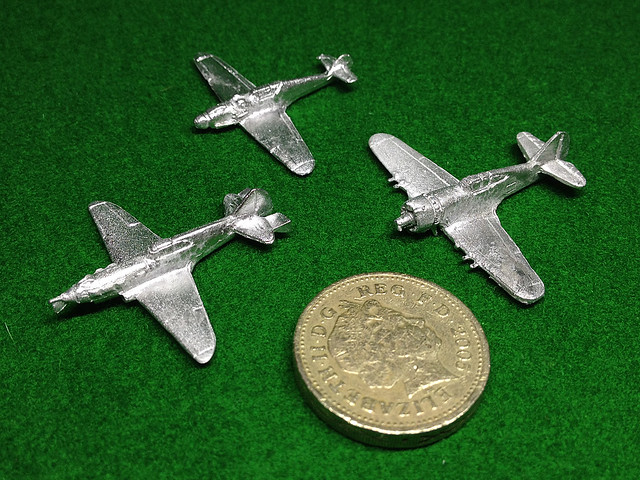
Here's the original shot I took of the newly arrived 1/300 fighter. As you can
see the LAGG - left - has some flash on the nose and tail and you may be able
to make out the fatter right wing compared to the thinner/straighter left wing.

Next: In the next part I begin the painting of the model.